All posts by Fine Eyewear

Watch out! Sink Drains May Harbor Infection-Causing Fusarium Fungus

HealthDay   reports, “Disease-causing strains of the fungus Fusarium are present in bathroom sink drains, which may be a common source of infection in humans,” according to a study published in the December issue of the Journal of Clinical Microbiology. A little over five years ago, “Fusarium was the cause of an outbreak of fungal keratitis…among contact lens wearers in the United States.”


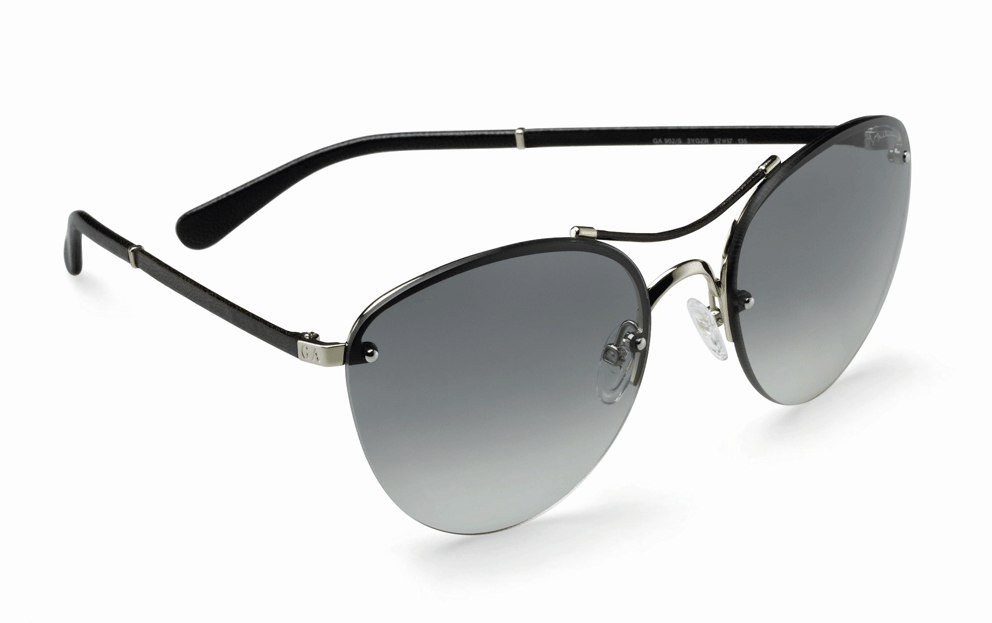
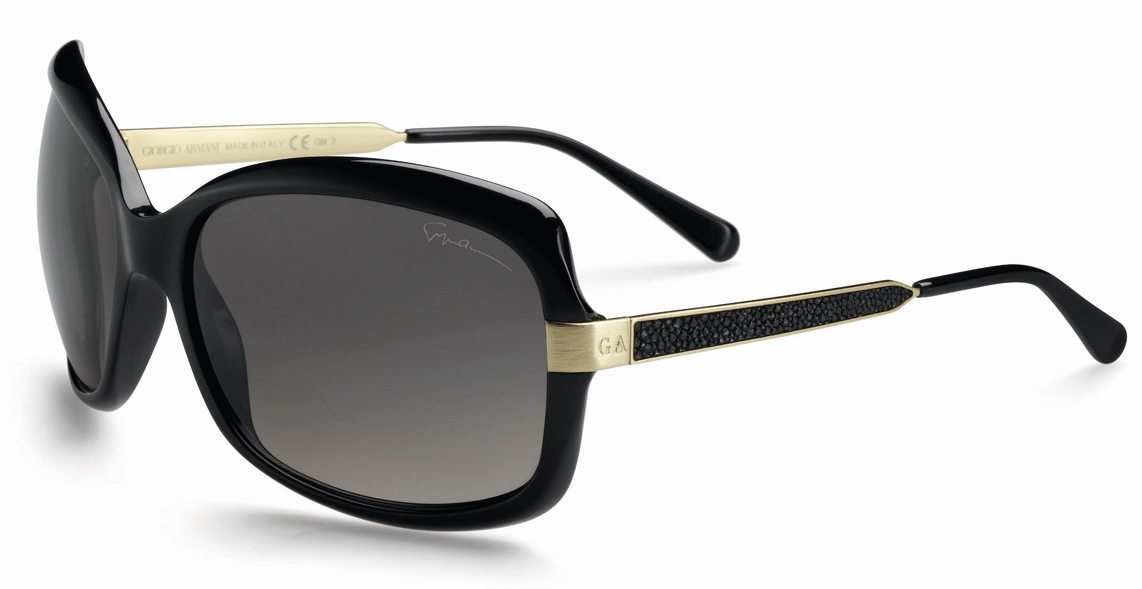
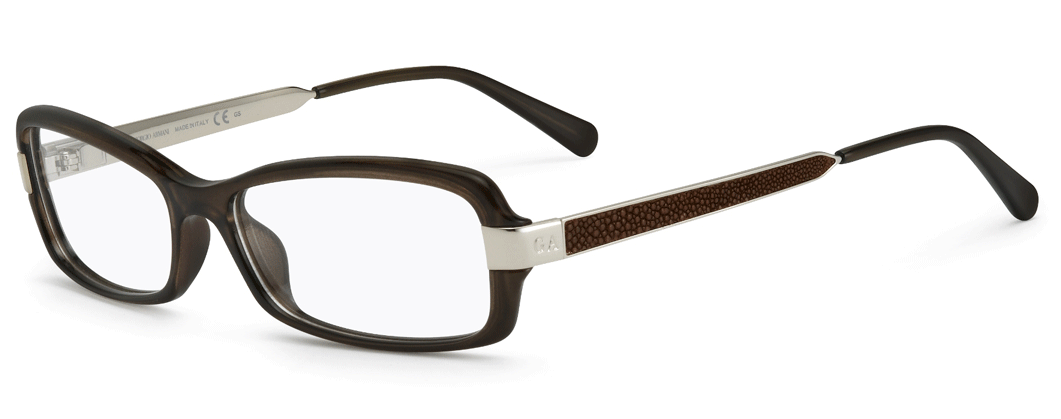
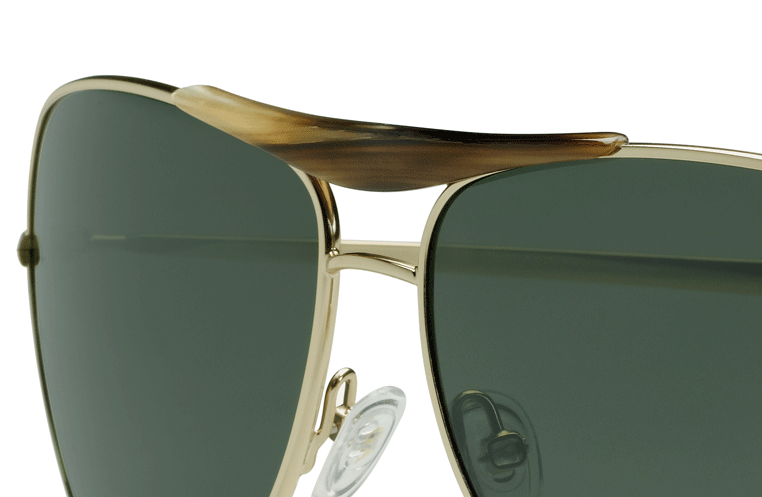
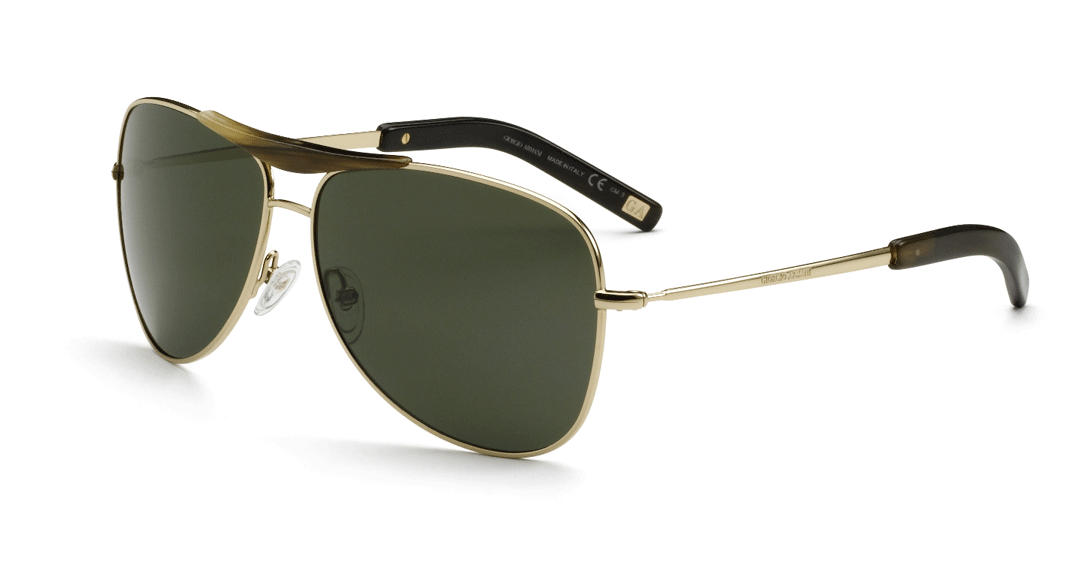
Giorgio Armani Precious Materials Collection Debut

Presenting the Giorgio Armani Precious Materials Collection, the new 2011/2012 collection from the luxury brand featuring exotic leather finishes.

One ophthalmic style, two sun styles and one exclusive sun style.


Fine Eyewear & Eyecare is a full service eye care facility. We offers Giorgio Armani and other unique collections. We offer one of the largest collections of unique eyewear in Central Texas. Our eye care facility is staffed by eye doctors who care about your vision requirements.  We’re located in the Heb shopping center at Parmer and 1431, located at the three corners of Cedar Park, Austin and Round Rock, TX and a short drive from Georgetown, TX , Teravista and Avery Ranch.

You can find more information at www.FineEyewear.Net


Sudden Onset Of Floaters or Flashes Requires Prompt Medical Attention

When blood flow through the retina is blocked or when the retina pulls away from the wall of the eye, getting the problem properly diagnosed needs to be done ASAP.  Treatments can do wonders if   begun before the damage is irreversible.  A delay in getting to a retinal specialist can diminish the ability for therapy to preserve or restore normal vision.”

Patients who experience symptoms of a “mini-avalanche of the spots referred to as floaters” along with “lightning-bolt” flashes should see an eye doctor immediately. In some cases, a detached retina may present with “blind spots or…black curtains,” and laser surgery is necessary to save sight.

AOA Study Cites Safety and Compliance Issues for Rx Eyeglasses Ordered Online

Make no mistake, Glasses are not TV’s or Cell phones or other things you might order online. When you receive your glasses in the mail, you can’t just turn it on to verify if the prescription is working and accurate. Glasses are medical device’s used to help organ’s in your body function better. A good pair of glasses help your visual/brain and hand eye coordination perform better. A bad Rx or cheap lenses can cause headaches and other problems. A cheap pair of Sunglasses may cause even more harmful UV rays to enter into and cause permanent to damage your eyes. Manufacturing a great pair of glasses to specific tolerances is a difficult thing to do and requires highly experienced, trained personal. We don’t take your vision lightly and neither should you – FE.

Consumers who order prescription eyeglasses online often receive glasses that fail to comply with optical tolerance and impact resistance requirements, according to a newly released study conducted by the American Optometric Association in conjunction with the Optical Laboratories Association and The Vision Council.

The study, which was published in the September issue of Optometry: Journal of the American Optometric Association, found that nearly half of the prescription eyewear ordered online in the U.S.—44.8 percent—had incorrect prescriptions or did not meet physical parameters to provide sufficient protection to the wearer.


Car Windows Do Not Filter Out UVA Rays

Car windows  and those in your home — are good at filtering out ultraviolet B rays, which cause sunburns. But car and home windows generally don’t filter out ultraviolet A rays, which penetrate deeper into the skin” and “can interfere with your body’s ability to protect against skin cancer,”

FDA Cracks Down On False LASIK Claims

HealthDay (9/30, Mann) reports, “The US Food and Drug Administration is once again cracking down on eye care professionals who make false safety claims and promises about the popular LASIK eye surgery.”

Questions to research when considering LASIK:

1. What are the risks of LASIK. (dry-eye, star/halo night vision, ability to properly heal after surgery)
2. Will LASIK make the need for eye glasses go away 100%? (in many cases no)
3. Will LASIK make the need for reading glasses come at an earlier age (in many cases yes)
4. Is there an age window to get LASIK?
5. Does my eyeball structure make me a good LASIK candidate?
6. Ask your surgeon if he/she has had LASIK performed on their own eyes.

Further reading can be found by clicking this FDA website: MedicalDevices/ProductsandMedicalProcedures/SurgeryandLifeSupport/LASIK

About Dry eye

Dry eye is one of the least understood ocular diseases and yet one of the most common complaints we hear from  patients.

Women are more frequently affected than men. Dry Eye Disease is often caused by hormonal changes due to aging, menopause, and other medical conditions or their treatments.

Your eyes need a constant layer of healthy, balanced tears called the “tear film” to stay nourished and protected. A change in the quality or the quantity of your tears can result in an un-balanced tear film.

Dry Eye Symptoms

Symptoms of Dry Eye Disease may include:

Stinging
Burning
Scratchy Sensation
Sensitivity to Light
Tearing
Tired Eyes
Contact Lens Discomfort
Blurred Vision

These dry eye disease symptoms often worsen at the end of the day or after visually focusing for a prolonged period on a nearby task.

Often dry eye symptoms are mistaken for allergies, climatic conditions or just “eyestrain”. While all of these may aggravate Dry Eye Disease, they are not the cause.

Dry Eye Causes

Environmental Causes:

Hot, dry and/or windy climates, high altitudes, excessive sun exposure, central heating, air conditioning, cigarette smoke, air pollution, air travel.

Refractive eye surgeries:

Dry eye is the most common complaint following LASIK. Your doctor should test your eyes prior to surgery to ensure the best outcome.

Contact Lens Wear:

Two million people a year give up on wearing contact lenses. 50% of these contact lens “dropouts” say its due to dryness or discomfort. If you have Dry Eye Disease, your doctor can prescribe a specific lens for your condition or prescribe treatment to allow you to wear your lenses more comfortably.

Low blink rate:

Blinking is critical in stimulating tear production, as well as spreading the tears across the eye’s surface. The three common culprits responsible for reducing your blink rate are computer use, reading, and watching TV. Sometimes just remembering to blink can improve how your eyes feel.

Medications:

It is important that your eye doctor know all of the medications that you take. Some medications known to aggravate dry eye disease are; allergy medications, decongestants, antidepressants, blood pressure medications, birth control pills, diuretics, and pain medications just to name a few.

Diseases:

Some diseases associated with dry eye disease are; Diabetes, Parkinson’s disease, Sjögren’s syndrome, Rheumatoid arthritis, Lupus, Lacrimal Gland Deficiency, Blepharitis, Stevens-Johnson syndrome, and Rosacea.

Hormonal deficiencies or changes:

Thyroid conditions, hormonal changes during menopause, decreased production of androgen, estrogen supplementation can all affect ocular health. Be sure to let your doctor know if you are taking hormone replacement therapy or have a thyroid condition.

Treatment

Many treatments for dry eyes are available without a prescription.  However, it’s wise to see an optometrists to evaluate the cause of the condition and to create the best treatment plan for you.

Treatments for dry eyes may include:

  • Changes in diet
  • Supplementation
  • Artificial Tears: There are many artificial tears available over the counter. Ask an Accredited Dry Eye Center which drop is best for your specific condition.
  • Ointments. If your eyes dry out while you sleep, you can use a thicker lubricant, such as an ointment, at night.
  • Plugs (temporary and permanent punctual occlusion). Sometimes it is necessary to close the ducts that drain tears out of the eye. Temporary or permanent plugs can be inserted to hold tears around the eyes longer. Many patients find that plugs improve comfort and reduce the need for artificial tears.
  • Restasis®. For the treatment of chronic dry eye, Restasis is currently the only prescription eye drop that helps your eyes increase their own tear production with continued use.
  • Other medications. Other medications, including topical steroids, may also be beneficial in some cases.
  • Surgery. If needed, the ducts that drain tears into the nose can be permanently closed to allow more tears to remain around the eye. This is done with local anesthetic on an outpatient basis. There are no limitations in activity after having this surgery.

Our doctors at Fine Eyewear & Eye care in Cedar Park treat patients who suffer from dry eye every day. Fine Eyewear is  located at the three corners of Cedar Park, Austin and Round Rock, TX and a short drive from Georgetown, TX . Some of the local neighborhoods served by Fine Eyewear include Forest Oaks, Silver Oaks, Teravista, Avery Ranch, Stone Canyon, Mayfield Ranch, The Ranch at Brushy Creek, Vista Oaks and Wood Glen – we have an eye doctor close by for you! Come and See us! Visit our main website at www.FineEyewear.net

Eye Exams May Help Rule Out Eye-Related Links To Behavior, Learning Problems

According to the American Optometric Association, “even though a child may have 20/20 vision, the following habits also can signal less obvious vision problems: loses place while reading, avoids close work,” and “holds reading material closer than normal.”

A visit to the eye doctor for a comprehensive eye exam is an important part of overall health,” and is especially important for kids about to return to school.  According to an American Optometric Association survey of K-12 teachers, 81 percent believe vision and learning are interdependent.”

Dermatologist Recommends Sun Protection For All

In “Medicine Matters,” Medscape (7/21, Fryhofer) Dr. Sandra Fryhofer discusses “six tanning and sunscreen myths.” Fryhofer recommends everyone wear sunscreen as much as possible, along with UV-protective sunglasses and a hat.  Even inside cars, people need to wear sunscreen, since “a study in the Journal of American Academy of Dermatology found that people who spend a lot of time in the car are more likely to get skin cancers on the side exposed to sunlight during driving.”

And don’t forget your sunglasses!